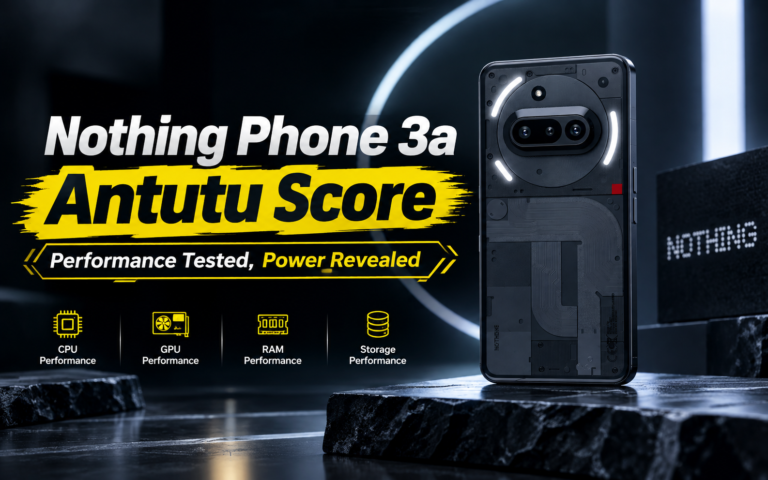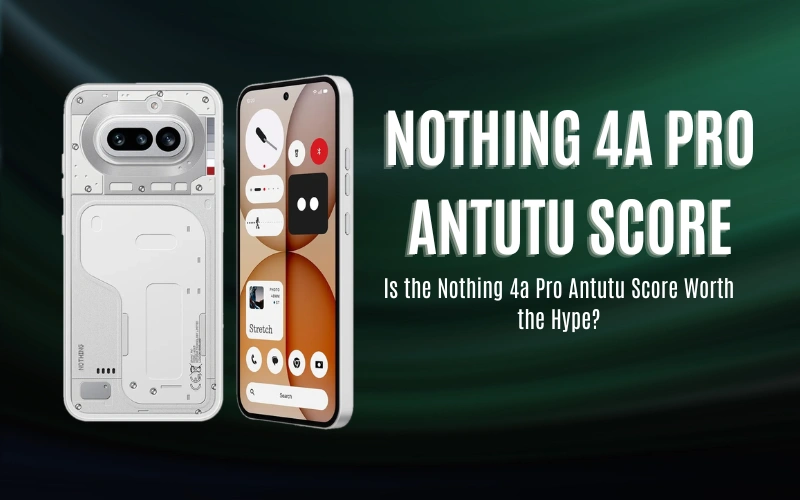
The Nothing 4a Pro Antutu Score sits between roughly 1,015,000 and 1,411,440 points across different testing units and AnTuTu versions, placing the phone firmly in the upper mid-range performance class of 2026.
Disclaimer: Benchmark scores, including the Nothing 4a Pro Antutu Score, vary between individual units, software versions, and testing conditions. The figures in this article are compiled from publicly available benchmark listings and review reports current as of July 2026. Readers are encouraged to verify the latest scores directly through the AnTuTu app or official retailer listings before making a purchase decision, since numbers can shift with software updates.
Quick Stats Table
| Spec | Detail |
|---|---|
| Phone Name | Nothing Phone (4a) Pro |
| Launch Date | March 2026 |
| Processor | Qualcomm Snapdragon 7 Gen 4 |
| RAM Options | 8GB / 12GB (LPDDR5X) |
| Storage Options | 128GB / 256GB (UFS 3.1) |
| Nothing 4a Pro Antutu Score (v10/v11) | 1,015,000 – 1,411,440 (varies by unit/version) |
| Geekbench Single-Core | ~1,335 – 1,385 |
| Geekbench Multi-Core | ~4,168 – 4,314 |
| Display | 6.83″ AMOLED, 144Hz, QHD |
| Battery | 5,080 mAh |
| OS | Android 16, Nothing OS 4.1 |
Note: The scores above are pulled from multiple public benchmark listings. AnTuTu numbers naturally shift with software updates, so treat this as a realistic range rather than one fixed figure.
What Is AnTuTu, and Why Should You Care About the Nothing 4a Pro Antutu Score?
Let’s keep this simple. AnTuTu is one of the most used benchmark apps in the phone world. It runs a phone through a series of tests — CPU math, GPU graphics rendering, memory speed, and everyday UX tasks — then adds it all up into one big number. That final number is what everyone calls the “Antutu Score.”
So when someone asks about the Nothing 4a Pro Antutu Score, they are really asking: “How fast and smooth is this phone going to feel, on paper?” It’s not the full story (real life matters more than lab numbers), but it gives a fair starting point before you spend your money.
Here’s the fun part. Nothing as a brand built its name on design first, transparent backs, glyph lights, all that cool stuff. So people often assume performance takes a back seat. The Nothing 4a Pro Antutu Score actually pushes back on that idea a bit. It shows a phone that looks good and also holds its own in raw numbers.
It also helps to know that AnTuTu isn’t the only benchmark that matters, but it remains the most widely recognized one among everyday buyers in India and across Asia, largely because the app is free, easy to run, and gives one simple number people can compare at a glance. Geekbench and 3DMark are more technical tools favored by reviewers and enthusiasts, testing specific things like single-core speed or graphics rendering in isolation. When you put AnTuTu, Geekbench, and 3DMark results together, as we do later in this article, you get a much more complete and trustworthy picture than any single score could offer on its own.
Nothing 4a Pro Antutu Score — Full Breakdown
Different benchmark trackers report slightly different totals for the Nothing Phone 4a Pro, which is completely normal for AnTuTu, since scores change with app version, RAM variant, and even background app activity during the test. Here is a breakdown based on publicly listed results:
| Test Segment | Approx. Points | What It Measures |
|---|---|---|
| CPU | 462,000 – 478,000 | Everyday app speed, multitasking |
| GPU | 321,000 – 322,000 | Gaming graphics, video rendering |
| Memory | 250,000 – 478,000 | App switching, RAM handling |
| UX | 362,000 – 371,000 | Touch response, scrolling, animations |
| Total Nothing 4a Pro Antutu Score | 1,015,000 – 1,411,440 | Overall performance |
Nothing 4a Pro Antutu Score vs Rival Phones
No benchmark number means much on its own. It only makes sense next to other phones in the same price range. Here’s how the Nothing 4a Pro Antutu Score stacks up against a few common rivals from the same period, based on publicly listed benchmark data:
| Phone | Chipset | Antutu Score (Approx.) |
|---|---|---|
| Nothing Phone (4a) Pro | Snapdragon 7 Gen 4 | 1,015,000 – 1,411,440 |
| OnePlus 13R | Snapdragon 8 Gen 3 | 1,900,000+ |
| Google Pixel 10A | Tensor G5 (or similar) | 1,100,000 – 1,300,000 |
| realme 16 Pro | Dimensity 8000 series | 1,300,000 – 1,500,000 |
| Redmi Turbo 5 Max | Snapdragon 8s Gen 4 | 1,900,000+ |
Figures for rival phones are approximate and drawn from general benchmark listings; always confirm with the latest official AnTuTu ranking before comparing, since chipsets get frequent driver updates.
Gaming Performance: Does the Nothing 4a Pro Antutu Score Match Real Gameplay?
Numbers are nice, but can you actually play games on it? Based on hands-on reviews, yes, and reasonably well too. The Snapdragon 7 Gen 4 chip inside the Nothing Phone 4a Pro handles popular titles like BGMI, Call of Duty Mobile, and Genshin Impact at stable frame rates on medium-to-high graphics settings.
During 3DMark Wild Life Extreme testing, the phone scored around 2,094 points, and on Steel Nomad it landed near 776 points. Those numbers back up what the Nothing 4a Pro Antutu Score already suggested: this is not a gaming-first phone, but it will not embarrass itself either. Casual and mid-intensity gamers should feel right at home.
Thermal Performance: Does It Heat Up During Testing?
Here’s where the phone earns a genuine compliment. Reviewers running the CPU Throttle Test noted performance dipped to around 75% at first, settling near 80% average across repeated rounds. That’s a decent throttling curve, and more importantly, testers noted that temperatures stayed fairly controlled even during heavy tasks like AnTuTu runs and 3DMark’s Extreme Stress Test.
In plain words: the phone doesn’t turn into a hand warmer the moment you open a game. That’s a real plus for anyone who games for long stretches or uses the camera continuously.
Battery Impact: How Long Does It Last Under Load?
A high Nothing 4a Pro Antutu Score means little if the battery drains in two hours. Thankfully, that’s not the case here. PCMark battery testing recorded roughly 13 hours 49 minutes of continuous use on the 5,080 mAh battery of the Nothing Phone 4a Pro, which is a solid figure for a phone in this segment. Everyday users doing calls, social media, and light gaming should comfortably get through a full day without hunting for a charger by evening.
Historical Updates: How Does This Compare to the Nothing Phone 3a Pro?
Nothing’s (a) series has come a long way in a short time. Reviewers pointed out that last year’s Phone 3(a) Pro drew criticism for its camera island design, while the newer model brought a metal frame and a faster chipset to the table. On the performance side, moving from the Snapdragon 7 Gen 3 (used in the 3a Pro) to the Snapdragon 7 Gen 4 gave a clear, noticeable jump in benchmark numbers.
This matters because it shows a pattern. Each year, Nothing seems to be treating performance as seriously as design, and the Nothing 4a Pro Antutu Score is proof of that shift rather than a one-off surprise.
Alternatives and Related Processors to Know About
If you’re shopping around and comparing chipsets, here are a few names worth knowing alongside the Snapdragon 7 Gen 4 used in the Nothing Phone 4a Pro:
- Snapdragon 7 Gen 3 – the previous generation chip, found in older (a) series phones.
- Snapdragon 8s Gen 4 – a step up, common in phones like the Redmi Turbo 5 Max.
- Dimensity 8000 series – MediaTek’s answer in the same price tier, used by brands like realme.
- Tensor G5 – Google’s own chip, tuned more for camera and AI tasks than raw benchmark numbers.
Each of these targets a slightly different type of buyer, so the “best” chip really depends on whether you care more about gaming, camera processing, or daily smoothness.
It also helps to understand where these chips sit relative to each other in terms of manufacturing process. The Snapdragon 7 Gen 4 used in the Nothing Phone 4a Pro is built on a 4nm process, which strikes a balance between power efficiency and raw output. Chips built on smaller nm processes generally run cooler and sip less battery for the same amount of work, which lines up with what reviewers noticed during the thermal tests mentioned earlier. MediaTek’s Dimensity 8000 series uses a similar process node, which is part of why the two chipsets often trade blows in benchmark charts depending on the specific phone and its cooling setup.
Beyond the Numbers: Design, Display, and Camera at a Glance
Benchmarks tell one part of the story, but a phone is more than a score sheet. The Nothing Phone 4a Pro carries forward the brand’s cyberpunk-style design language, now wrapped in a metal frame — the first time an (a) series model has used metal instead of plastic or glass alone. It’s also the thinnest phone Nothing has released so far, at around 8mm, which makes it comfortable to hold for long gaming or scrolling sessions.
The 6.83-inch AMOLED display runs at a QHD resolution with a 144Hz refresh rate and HBM peak brightness of 1600 cd/m². In plain terms, that means smooth scrolling, sharp text, and visuals that stay readable even under harsh sunlight. Paired with the Nothing 4a Pro Antutu Score we discussed above, the display makes games and videos look as good as the phone performs under the hood.
On the camera side, the phone keeps a triple rear setup, similar to what we saw on the standard 4a. It’s a solid, dependable shooter rather than a class-leading one, so buyers picking this phone purely for photography might want to compare it against camera-focused rivals before deciding.
Common Myths About the Nothing 4a Pro Antutu Score
Benchmark numbers attract a lot of confusion online, so let’s clear up a few common myths before wrapping up.
Myth 1: A higher Antutu score always means a better phone. Not exactly. The Nothing 4a Pro Antutu Score is a strong indicator of raw speed, but things like software optimization, cooling design, and battery efficiency matter just as much for daily comfort. A phone with a slightly lower score but better heat management can sometimes feel smoother in real life.
Myth 2: The score is fixed and never changes. As we mentioned earlier, it isn’t. Software updates from Nothing, Qualcomm, or even AnTuTu itself can shift the total by a noticeable margin. That’s exactly why this article lists a range instead of one single number.
Myth 3: Antutu scores translate directly into gaming frame rates. They’re related, but not identical. Antutu measures a broad mix of tasks, while actual gaming frame rates depend heavily on how well a specific game is optimized for the chipset. Always check dedicated gaming benchmarks like 3DMark alongside the AnTuTu total for a fuller picture.
Who Is Testing These Numbers, and Can You Trust Them?
A fair question to ask before trusting any benchmark article: where do these numbers actually come from? The Nothing 4a Pro Antutu Score figures used in this piece are pulled from multiple independent, publicly listed benchmark trackers and hands-on review reports, not a single source. This matters because individual review units sometimes perform differently from retail units due to firmware differences, thermal paste application, or even the specific silicon batch used.
For anyone who wants to verify these numbers personally, the most reliable method is running the official AnTuTu Benchmark app directly on your own unit after a full software update, rather than relying purely on numbers seen online. That single step removes most of the guesswork.
Buying Advice: Is the Nothing 4a Pro Antutu Score Good Enough for You?
Here’s our honest take, based on the numbers above and general usage patterns in this price segment:
- Buy it if: you want a phone that looks unique, handles daily tasks without lag, plays most games at medium-high settings, and you value a cooler-running chip over chart-topping numbers.
- Skip it if: you are a heavy mobile gamer chasing the highest frame rates, in which case a Snapdragon 8-series phone like the OnePlus 13R makes more sense.
- Consider it if: you are upgrading from an older mid-range phone and want a real, noticeable jump in speed without paying flagship prices.
Conclusion
To sum it all up, the Nothing 4a Pro Antutu Score lands the phone comfortably in the upper mid-range bracket, backed by a Snapdragon 7 Gen 4 chip, smooth day-to-day performance, decent gaming ability, controlled heat levels, and a battery that easily lasts a full day. It won’t outrun true flagship chipsets, and it isn’t trying to. What it offers instead is dependable, well-rounded performance wrapped inside one of the more distinctive phone designs of 2026. If that sounds like your kind of phone, the numbers back up the hype.
Frequently Asked Questions
1. What is the Nothing 4a Pro Antutu Score?
Publicly listed results place it between roughly 1,015,000 and 1,411,440 points, depending on the testing unit and AnTuTu version used.
2. Which processor powers the Nothing Phone 4a Pro?
It runs on the Qualcomm Snapdragon 7 Gen 4 chipset, built on a 4nm process, paired with LPDDR5X RAM and UFS 3.1 storage.
3. Can the Nothing Phone 4a Pro handle heavy gaming?
Yes, for most popular titles at medium-to-high settings. It’s not aimed at hardcore competitive gamers chasing maximum frame rates, but casual and mid-level gaming feels smooth.
4. Does the phone heat up during long gaming sessions?
Testing showed reasonably controlled temperatures, with throttling averaging around 80% during repeated stress tests, which is a solid result for this price segment.
5. How long does the battery last on a full charge?
Around 13 hours 49 minutes in PCMark’s battery test, which should translate to a comfortable full day of mixed daily use.
Thank you for reading. If you enjoyed this, check out our previous blog post:
For SEO & Website Analysis Tools insights and official testing resources, visit the official website: Tools by Alaikas.