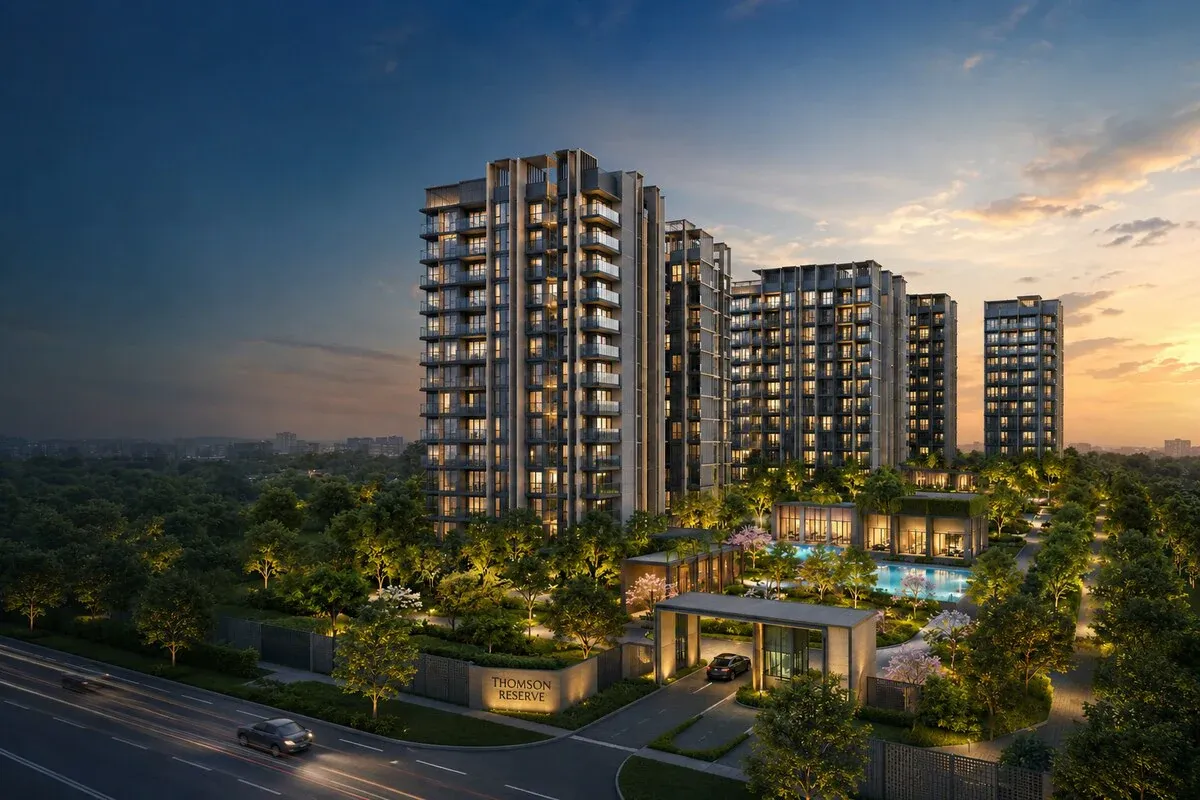
Buying a premium residential property requires careful financial preparation to ensure long-term stability. If you are eyeing a unit at Thomson Reserve, understanding your future financial commitments is the first step toward successful homeownership. Calculating your monthly mortgage payment involves more than just plugging numbers into a basic online tool. You need to account for specific variables like interest rates, loan-to-value limits, and property taxes. By taking a structured approach to these calculations, you can comfortably plan your cash flow and secure your dream home without stretching your monthly budget. Let us break down the essential components you must calculate to estimate your monthly mortgage payments accurately.
Establishing the Purchase Price and Down Payment
The foundation of any mortgage calculation is the total purchase price of your property. For a premium development like Thomson Reserve, prices vary significantly based on unit sizes, floor levels, and facing directions. Before calculating your monthly payments, you must determine how much capital you can commit upfront. In Singapore, the maximum Loan-to-Value (LTV) limit for bank loans is typically 75% of the purchase price. This means you must cover the remaining 25% as a down payment.
At least 5% of this down payment must be paid in cash, while the remaining 20% can come from your Ordinary Account in the Central Provident Fund (CPF) or cash. For instance, if a unit costs $2,000,000, your LTV limit caps your maximum loan amount at $1,500,000. Your upfront down payment will total $500,000, with at least $100,000 required in cash. Reducing your loan size by paying a larger down payment directly lowers your principal debt, which in turn reduces your monthly interest charges. When you establish these baseline numbers early, you can avoid overextending your finances and ensure a smoother loan approval process. Additionally, remember to factor in the Buyer’s Stamp Duty (BSD) and any Additional Buyer’s Stamp Duty (ABSD) that applies to your profile. These transactional costs require upfront cash or CPF, meaning they cannot be folded into your main home loan.
Evaluating the Impact of Unit Selection and the Site Layout
Your choice of unit within the development directly impacts your purchase price and subsequent mortgage. Studying the Thomson Reserve site plan helps you identify how different blocks, stacks, and unit types are arranged. Units facing premium views, such as lush greenery or central water features, generally command a higher price per square foot than units facing main roads or service areas.
How Layout Affects Valuation
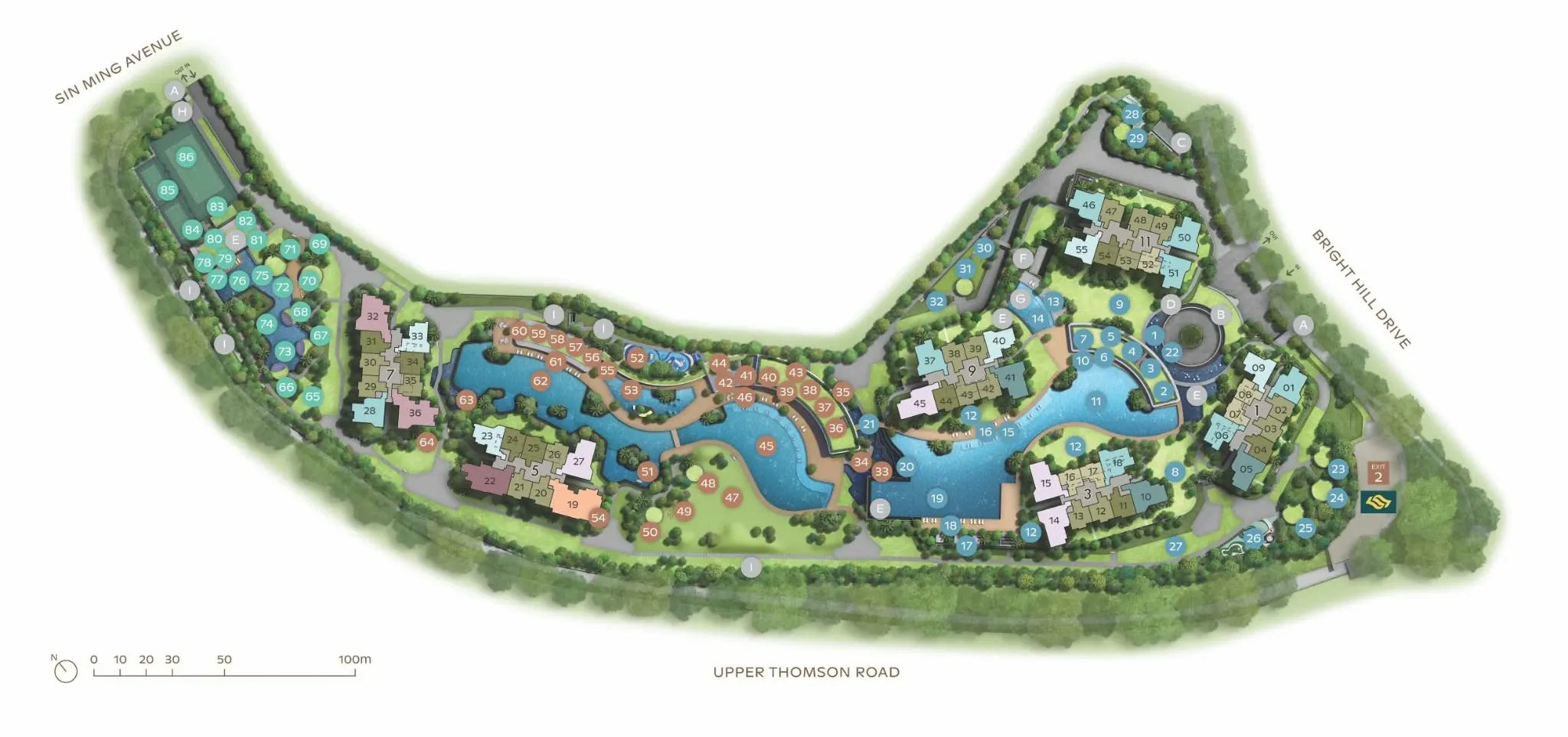
When you look at the Thomson Reserve site plan, you will notice variations in unit layouts, from compact apartments to spacious multi-bedroom units. Corner units often feature extra windows and better ventilation, which adds a premium to the baseline cost. Higher floors also carry a price premium, typically increasing by a set percentage per level.
These spatial differences mean that two units with the same floor area can have vastly different price tags. When you run your mortgage calculations, use the specific pricing for your preferred stack rather than a generic development average. This precise approach prevents surprises when you transition from planning to signing the option to purchase. Understanding how layout choices influence the overall valuation ensures you choose a home that fits both your lifestyle preferences and your long-term financial boundaries.
Factoring in Interest Rates and Loan Tenures
Interest rates and loan tenures are the two most powerful levers governing your monthly mortgage payments. Because interest rates fluctuate based on market conditions, you must choose between fixed-rate and floating-rate loan packages. Fixed-rate packages offer predictable payments for a set period, usually two to three years, protecting you from sudden market spikes. Floating-rate packages, often tied to benchmarks like the Singapore Overnight Rate Average (SORA), fluctuate monthly or quarterly, which can lower your costs when interest rates trend downward.
The Balance of Loan Tenure
The length of your loan tenure also shapes your monthly commitment. For residential properties, the maximum loan tenure is typically 30 years. A longer tenure stretches your principal repayment over more years, which reduces your immediate monthly payment. However, a longer tenure also means you will pay significantly more interest over the life of the loan. Conversely, a shorter tenure, such as 15 or 20 years, increases your monthly payment but saves you thousands of dollars in interest. You must balance these factors while ensuring your total monthly debt obligations do not exceed the Total Debt Servicing Ratio (TDSR) limit, which currently caps your total monthly debt repayments at 55% of your gross monthly income.
Accounting for Maintenance Fees and Additional Costs
Your monthly housing budget extends far beyond the principal and interest payments on your bank loan. Owning a unit in a premium development like Thomson Reserve involves ongoing maintenance and operational costs that you must calculate beforehand. Property maintenance fees, often charged quarterly, cover the upkeep of shared facilities like swimming pools, gyms, security services, and landscaped gardens. These fees are determined by the share value assigned to your specific unit size, meaning larger units pay higher maintenance costs.
Taxes and Insurance Obligations
In addition to maintenance fees, you must budget for annual property taxes. The Inland Revenue Authority of Singapore (IRAS) calculates property tax based on the Annual Value (AV) of your home, which is the estimated annual rent your property could fetch. Owner-occupied properties enjoy progressive tax rates, but these rates still add a notable sum to your yearly expenses. Finally, do not overlook home insurance. While basic fire insurance is mandatory for mortgaged properties, you should opt for comprehensive home content insurance to protect your interior renovations and personal belongings. Factoring these recurring expenses into your monthly cash flow projections ensures you maintain a comfortable lifestyle after moving into your new home.
Conclusion
Estimating your monthly mortgage for Thomson Reserve requires a comprehensive look at both upfront and recurring costs. By analyzing the Thomson Reserve site plan to choose the right unit, selecting the optimal loan tenure, and factoring in interest rates alongside maintenance fees, you can build an accurate financial model. This disciplined approach protects your household from financial stress and ensures that your property investment remains a source of security and pride. Take the time to run these calculations using realistic interest rate stress tests before finalizing your purchase. With a clear financial plan in place, you can confidently take the next steps toward securing your home in this premium development.